
Leadership challenge no.1: information overload, why business performance management matters
Contents
One of the most important responsibilities of any leader is knowing how to distinguish between relevant and irrelevant information. Context plays a critical role in making that distinction because it determines what information actually matters in a given situation. This is not only a core leadership responsibility; it is also a foundation of both individual and organizational performance.
The underlying premise is simple: good decisions accumulate, and over time, they translate into stronger organizational performance. This relationship is not new and has been demonstrated in numerous empirical studies. Effective business performance management builds on this principle by helping leaders focus on the information that supports better decisions rather than simply increasing the amount of information available to them.
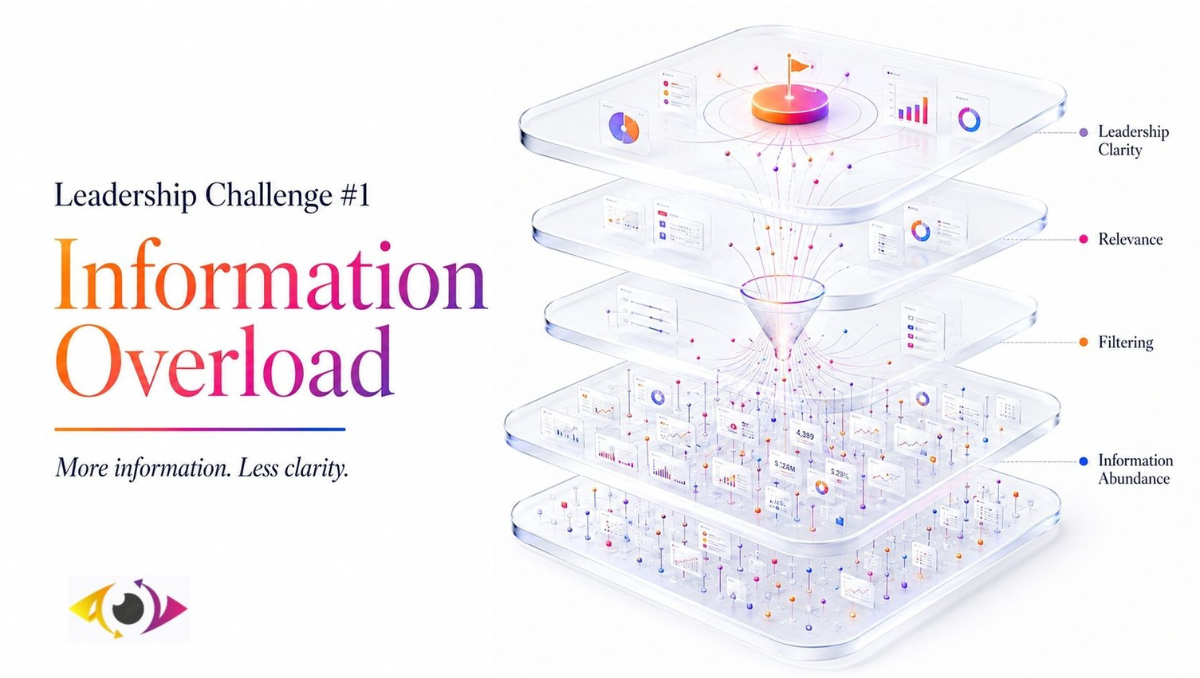
Leaders face a dilemma: information quantity vs. information quality
What has changed, however, is the sheer amount of information available to leaders when making decisions. That volume has grown steadily in recent years, accelerated further by advances in digitalization and artificial intelligence. Yet the amount of information available says little about its quality. This creates a difficult dilemma for leaders. On the one hand, they are confronted with an overwhelming flood of information. On the other, much of that information provides limited insight and requires significant effort to structure, interpret, and put into the context of the decision at hand.
The problem does not stop at the individual level. At the organizational level, an abundance of information creates more opportunities to interpret, challenge, and question what is already available, which in turn generates demand for even more information. In the worst case, organizations can become trapped in a self-reinforcing cycle of collecting information, interpreting it, and collecting still more information. The time and attention needed for effective leadership interventions that actually move the organization forward are then lost. This is precisely where business performance management becomes relevant. The goal is not to eliminate information, but to ensure that the right information reaches the right decision-maker at the right time.
Examples from practice
Enterprise IT systems for every function reinforce functional silos
Companies rely on a wide range of enterprise IT systems. Enterprise Resource Planning (ERP) systems such as SAP, Business Central, or JD Edwards form the digital backbone of day-to-day operations in many organizations. These are complemented by specialized enterprise IT systems designed around the specific needs of individual functions. Common examples include Customer Relationship Management (CRM) systems such as Salesforce, Microsoft Dynamics, or HubSpot for sales; Supplier Relationship Management (SRM) systems for procurement; Manufacturing Execution Systems (MES) for production; and Management Information Systems (MIS) for controlling and corporate management.
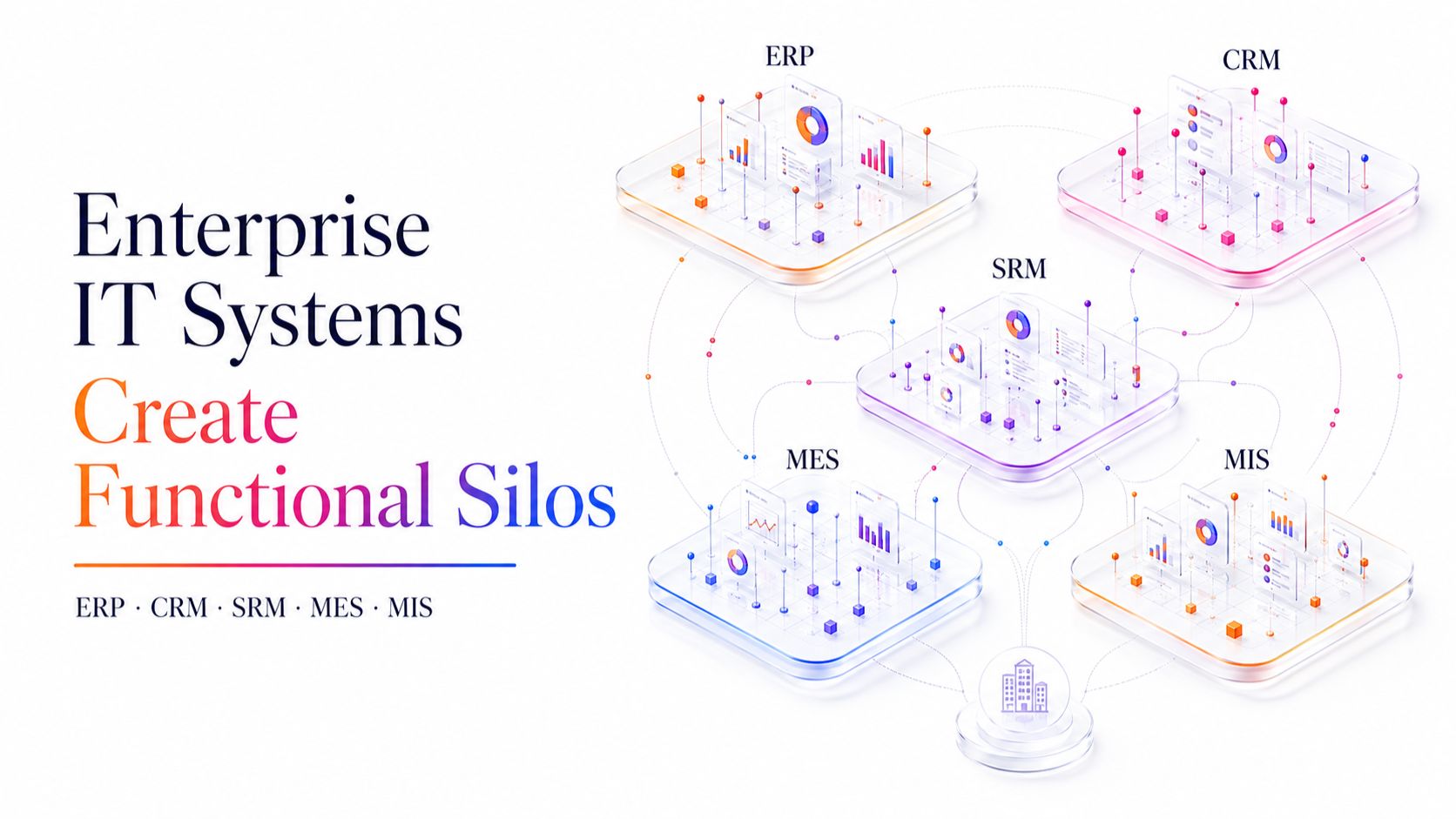
Each of these systems captures a specific functional view of the organization. This is reflected in the large number of dashboards and reports used to present KPIs, analyses, communication histories, and other information for each function. Leaders therefore face a choice: either navigate a collection of functional silos, or invest significant time and effort in bringing these individual perspectives together to form a coherent overall picture. This fragmentation also creates demand for additional corporate performance management software, as organizations look for ways to connect functional information with broader business objectives.
Data analytics platforms enable data crunching and deep dives, but leaders often lose the bigger picture
One way to connect the different functional views provided by enterprise IT systems is through data analytics platforms such as Databricks or Microsoft Fabric. These platforms aggregate relevant data into a data lake. Business intelligence systems like Power BI or Superset can then be used to visualize that data.
This combination enables leaders to conduct extensive analyses across functions and domains. So-called drill-downs can even take users down to the underlying transaction level in systems such as SAP, Salesforce, and others.
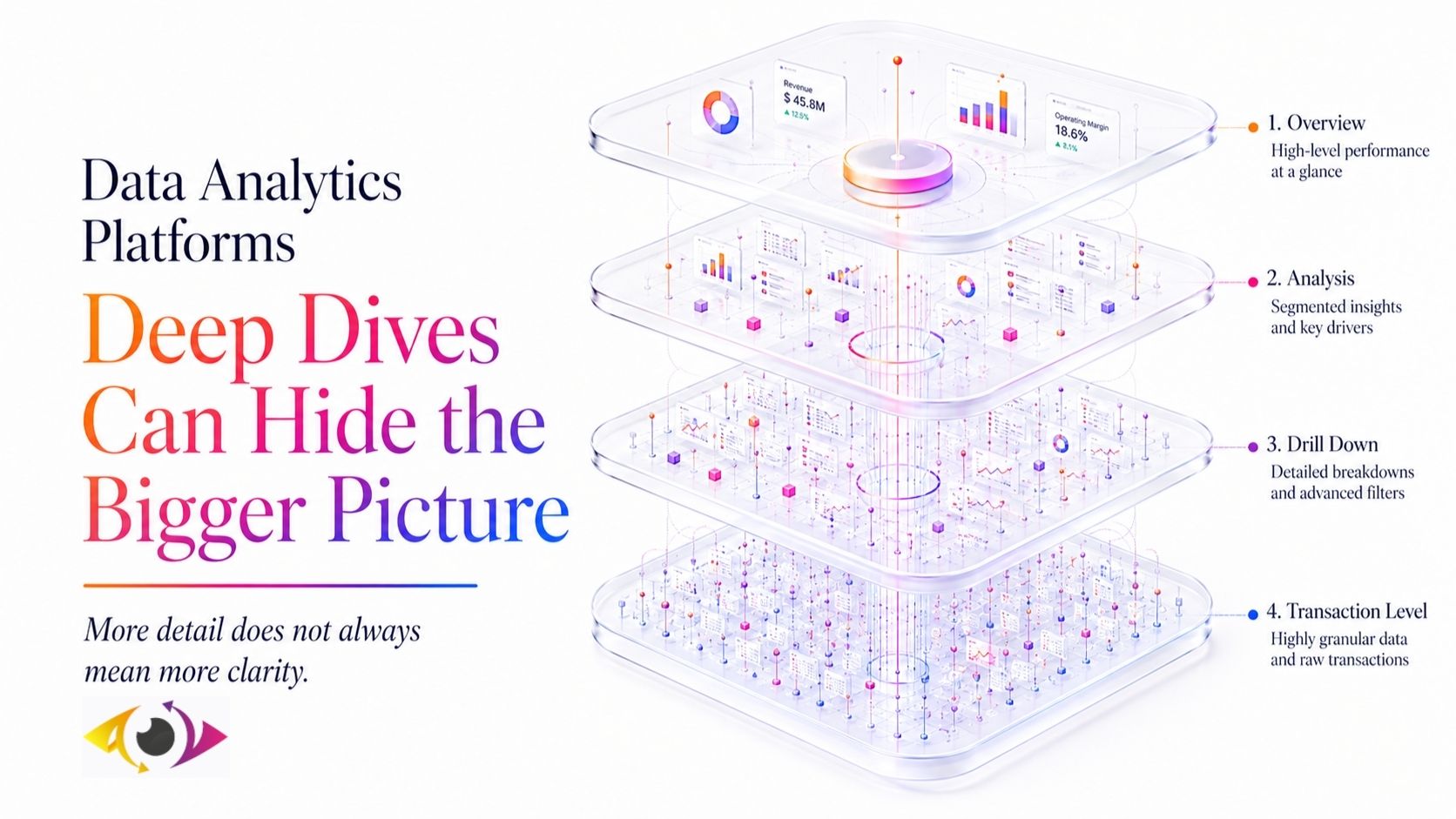
But this capability comes with considerable complexity. Extensive filter options and a wide range of visualization tools enable increasingly detailed analysis. What often gets lost, however, is the quick overview of deviations, risks, and opportunities that should come before the deep dive.
A similar issue can occur with KPI dashboard software. While dashboards can make large amounts of information accessible, simply displaying more KPIs does not necessarily improve business performance management. The real value comes from identifying which indicators require attention and connecting them to the decisions and actions that follow.
KPI Bingo: does supply drive demand, or is it the other way around?
Enterprise IT systems generate vast amounts of data, which can be visualized directly within the systems through a wide range of configurable dashboards. Data analytics platforms bring this data together and provide the foundation for further visualizations and deeper analysis.
For leaders, this flood of information creates almost limitless possibilities to define KPIs, conduct detailed analyses, and then use those analyses to develop new and supposedly better KPIs.
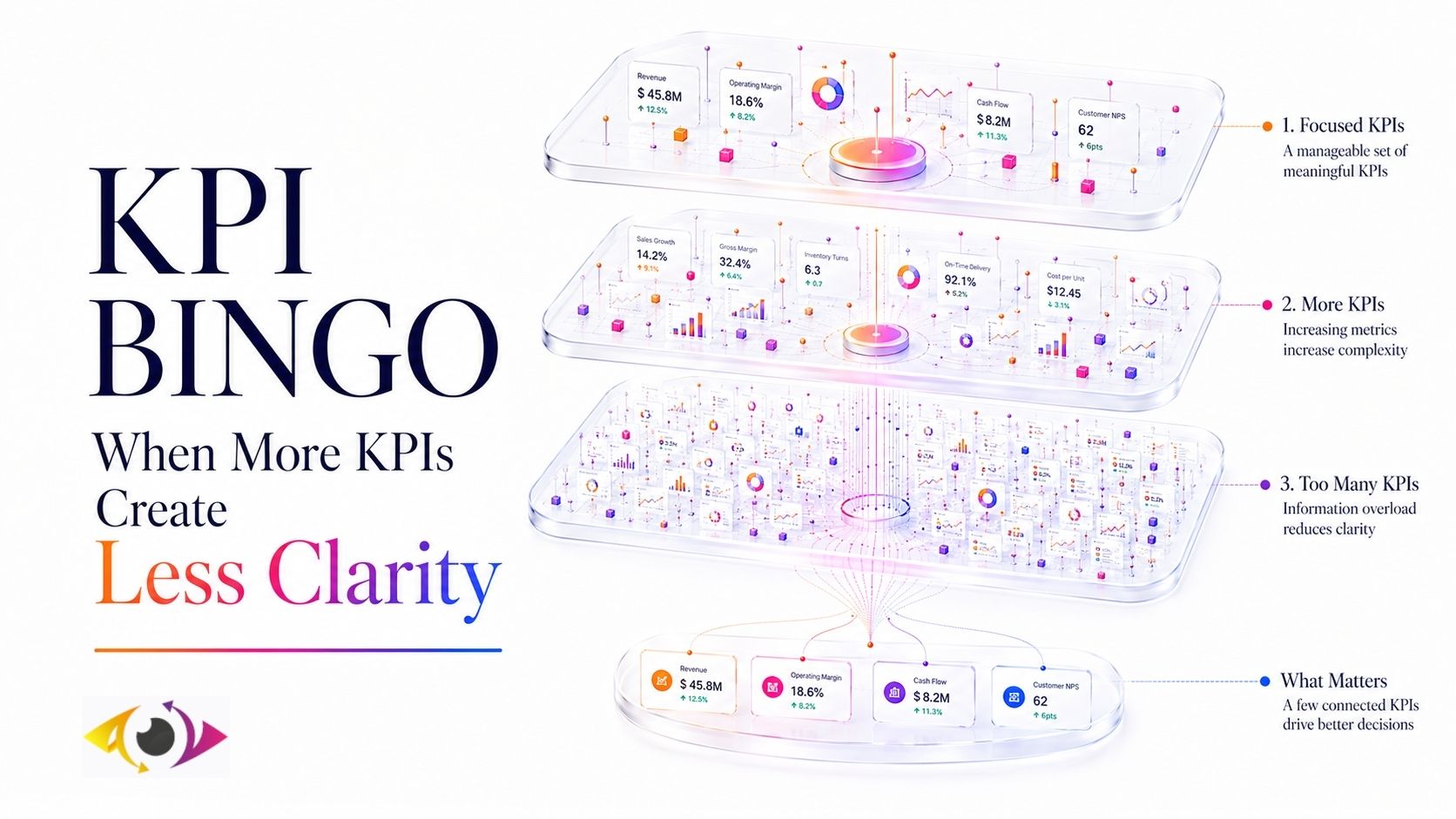
The problem is that the sheer volume of available data, combined with the technical ability to collect, analyze, and refine it, can create the very pattern described above. Instead of focusing on leadership interventions that help move the organization forward, significant amounts of time and energy are spent on endless data analysis and debates about KPIs.
This raises an important question: What solutions can help leaders get the maximum value from the vast amount of information available to them, without being overwhelmed by the disadvantages that come with it?
The lean classic: analog shopfloor management
The classic leadership tool for addressing this Leadership Challenge is Shopfloor Management (SFM). Originating in Lean Management, SFM applies a range of leadership principles through physical boards located directly on the shop floor. Each board displays the KPIs, actions, problems, and information that are relevant to the respective team.
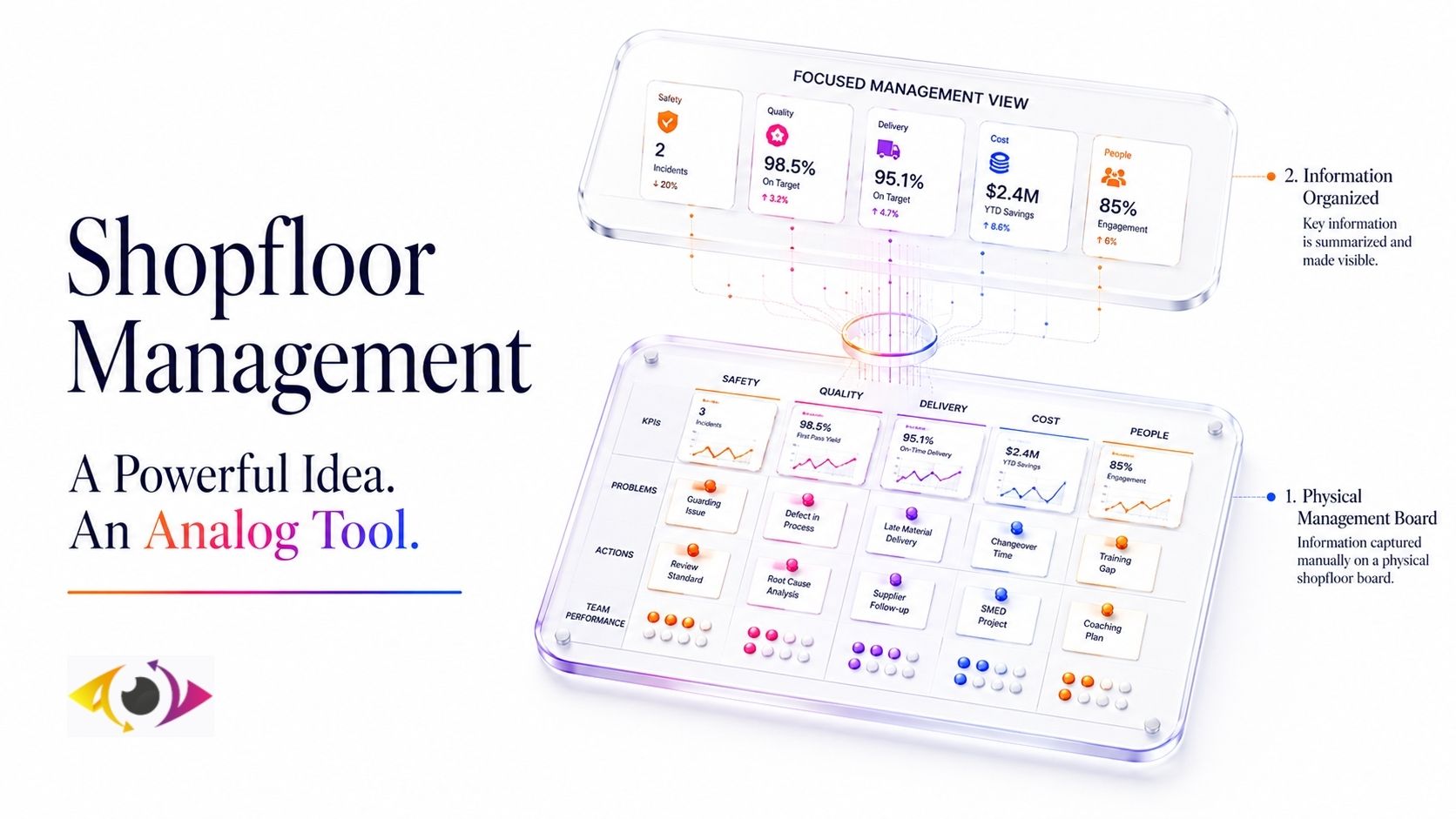
SFM therefore creates a high degree of transparency while helping leaders focus on the information that truly matters. Its disadvantage, however, is that it is a completely analog leadership tool. Information has to be prepared physically, through printouts, templates, or handwritten notes. Finally, everything has to be pinned to the physical board.
Also, analog SFM requires people to be physically present at the board. Virtual collaboration across different locations and teams is therefore not possible. Nevertheless, the underlying principle remains highly relevant to modern business performance management: leaders need a focused view of the information that supports action, not an unlimited stream of data.
The flexible team wiki: atlassian confluence
Another leadership tool that is more firmly rooted in the digital world than traditional analog SFM is Confluence. It is a cloud-based solution that allows leaders to create individual team pages. These pages can, for example, be structured similarly to an SFM board, making the information relevant to a particular team readily available. Confluence also provides functionality for visualizing KPIs and documenting tasks. As a team wiki, Confluence is designed primarily around collaboration within organizations. This is reflected in the flexibility it provides for customizing team pages.
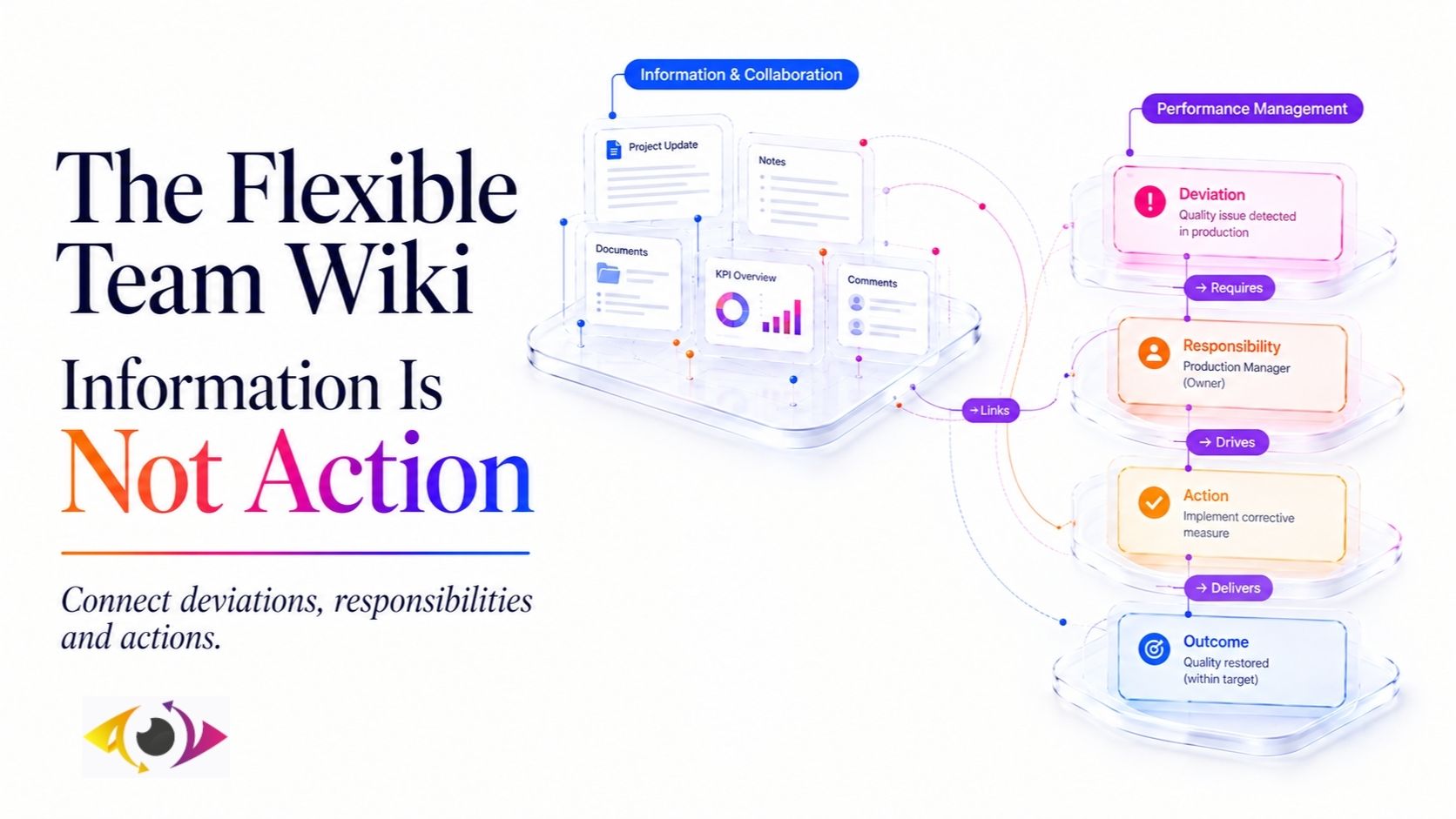
That flexibility also comes with a limitation, however; certain functions that are important to leaders, such as deviation management and action management, are not available in Confluence. This distinction is important because effective deviation management software should do more than document that a deviation exists. It should help connect deviations with the relevant information, responsibilities, actions, and decisions needed to address them.
Holistic business performance management: AgilityVisual?
AgilityVisual is a leadership tool specifically developed to address the problem of information overload. It is a new type of Business Performance Management platform that operates above enterprise IT systems and data analytics platforms. At the heart of AgilityVisual are connected digital boards that enable leaders to visualize all the information relevant to them , including strategy, KPIs, goals, projects, and actions, within a single platform.
Once a leader defines which information should be displayed, the relevant data can be connected through connectors. This eliminates the transaction costs associated with switching between different dashboards.
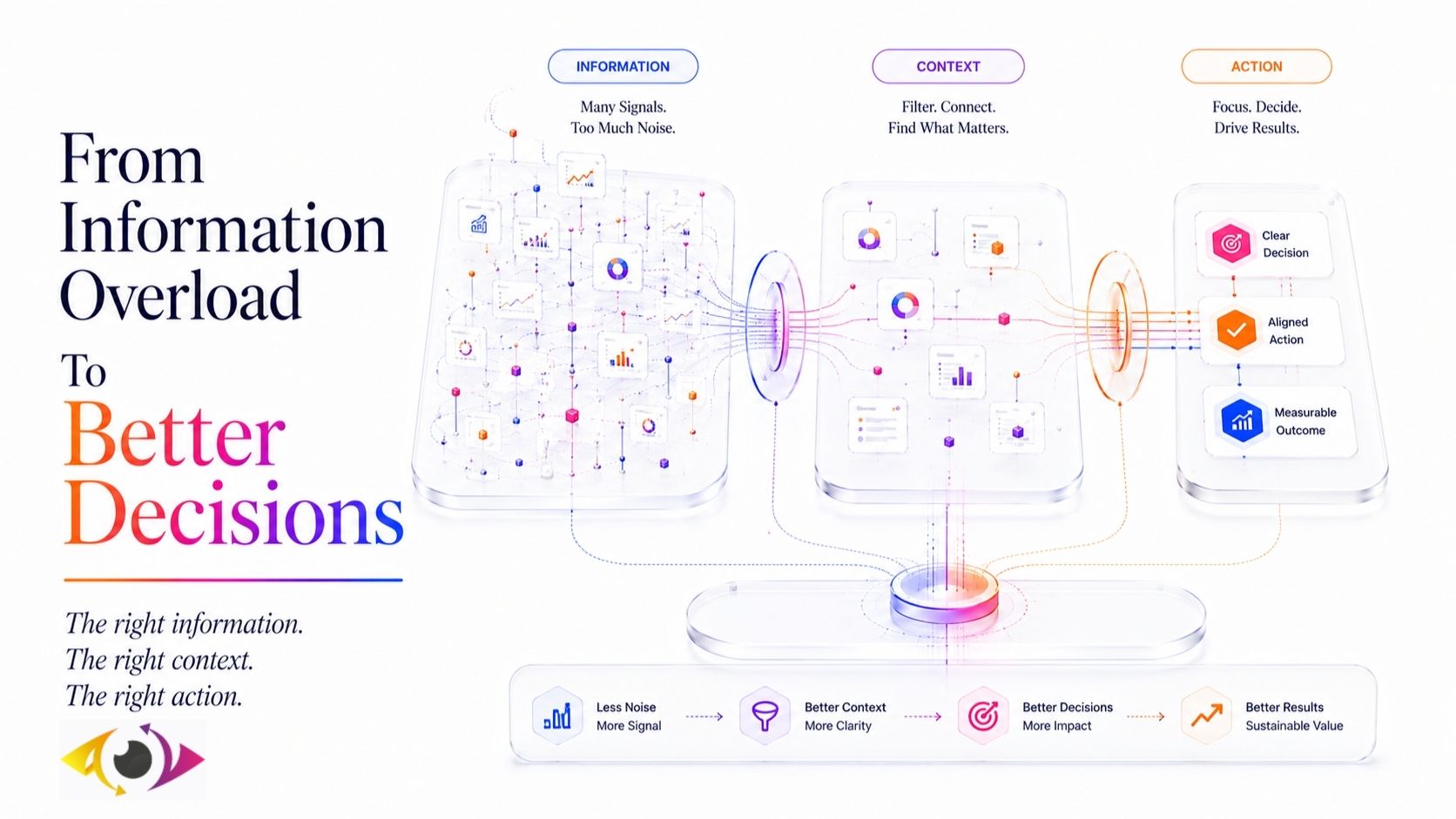
If day-to-day leadership reveals that additional information is needed, or that existing information needs to be adjusted, those changes can be made in AgilityVisual within minutes.
Rather than replacing the enterprise systems that generate organizational data, AgilityVisual provides a leadership layer above them. This allows leaders to move from isolated functional views toward a connected perspective of business performance.
In this sense, business performance management is not about creating another dashboard or another source of information. It is about creating a focused management environment in which the information already available across the organization becomes useful for leadership.
End notes
Information can be both a blessing and a curse. The difference is generally not the amount of information available, but its relevance and quality. Leaders in particular face the daily challenge of deciding which information should form the basis for their decisions. Enterprise IT systems, analytics platforms, KPI dashboards, and collaboration tools all provide valuable capabilities, but none of them automatically solve the fundamental problem of information overload.
Against this backdrop, the principles of Shopfloor Management, digital collaboration tools, and holistic business performance management offer different approaches to structuring the daily flood of information. The ultimate objective is not to collect more data. It is to give leaders the right context, visibility, and connections to make better decisions and turn those decisions into meaningful leadership interventions, and ultimately, stronger business performance.